
Precision Chemical Balance for Elevated Temperatures
Hot tub and spa maintenance in Washington for higher water temperatures and smaller volumes requiring tighter chemical control
Elevated water temperatures and smaller volumes in hot tubs demand precision chemical protocols that differ significantly from pool maintenance, with faster evaporation rates and concentrated bather loads per gallon creating rapid chemistry shifts. Desert heat in Washington intensifies spa water evaporation and mineral concentration, making weekly maintenance necessary to prevent scale formation and heater fouling during open and close season transitions. Heatwave Pools & Spas provides hot tub and spa maintenance that tests hot tub-specific parameters including pH, alkalinity, calcium hardness, and sanitizer levels while monitoring heater output, jet function, and circulation performance.
Maintenance visits adjust chemical doses for smaller water volumes that require tighter balance ranges, inspect heater elements for scale buildup that reduces efficiency, and verify jet circulation delivers proper pressure without air blockages. This approach addresses both water chemistry stability and equipment function in systems where small deviations cause rapid water quality decline.
Schedule a hot tub evaluation to establish a maintenance plan that accounts for usage patterns and local water mineral content.
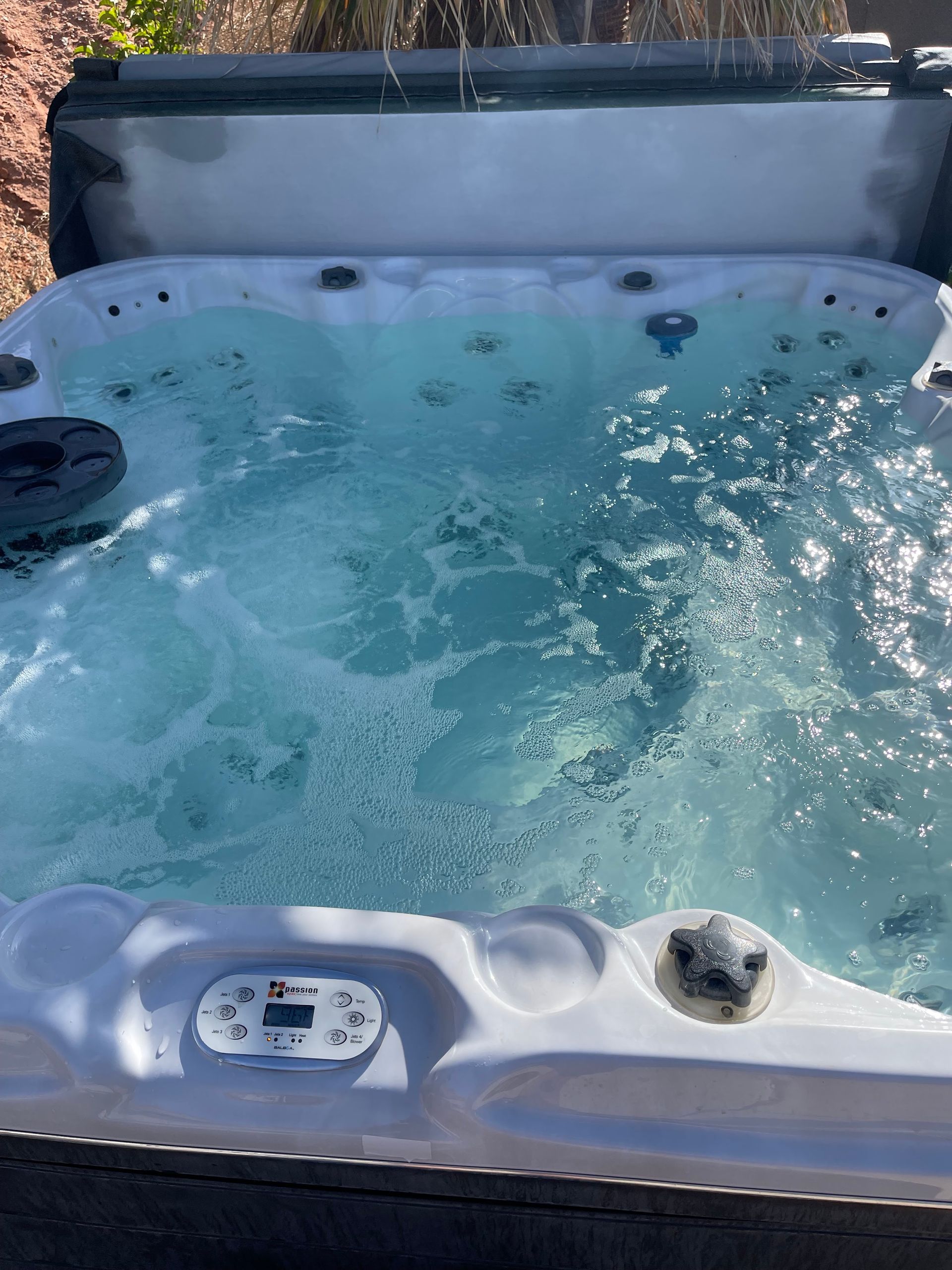
How Spas Require Different Chemical Attention
Hot tubs operate at temperatures between 100-104 degrees, which accelerates chemical reactions and sanitizer breakdown compared to pool water at 78-82 degrees, meaning chlorine or bromine levels drop faster and require more frequent adjustment. Smaller water volumes concentrate oils, lotions, and organic contaminants from bathers at higher ratios per gallon, stressing sanitizer demand and creating foam or cloudiness that takes longer to clear in confined circulation systems. Technicians test and adjust chemical parameters more frequently for spas because the margin for error is narrower—pH swings that would be minor in a 20,000-gallon pool become significant in a 400-gallon spa.
After consistent spa maintenance, water remains clear without foam accumulation, heater output stays stable without temperature drops caused by scale-coated elements, and jets deliver strong circulation without air lock interruptions. Chemical balance holds steady between service visits because mineral content and sanitizer levels are managed before they drift outside functional ranges.
Spa maintenance also includes filter cartridge inspection and cleaning on accelerated schedules compared to pools, since smaller cartridges handle proportionally higher contamination loads and clog faster. Calcium hardness must be controlled more precisely in spas than pools because elevated temperatures accelerate scale precipitation on heater coils, pump seals, and plumbing surfaces where deposits restrict flow and reduce heat transfer efficiency.
Questions Before Starting Your Project
Hot tub maintenance in Southern Utah addresses both the unique chemistry demands of small heated volumes and the equipment stress created by mineral-heavy local water.
What makes hot tub maintenance more complex than pool maintenance?
Higher water temperatures accelerate chemical breakdown and evaporation, smaller volumes concentrate contaminants faster, and tighter chemical balance ranges mean deviations cause water quality problems more rapidly than in pools.
How does desert heat in Washington County affect spa water evaporation rates?
Intense sun exposure and low humidity increase evaporation speed, concentrating minerals and raising total dissolved solids faster than spas in cooler or more humid climates—requiring more frequent water replacement to prevent scale buildup.
When should spa water be completely drained and refilled?
Most spas require draining every three to four months depending on bather load and chemical history, since accumulated dissolved solids eventually prevent proper chemical balance regardless of treatment adjustments.
Why do spas develop foam problems that pools rarely experience?
Higher bather load per gallon introduces more oils and lotions that reduce water surface tension, and elevated temperatures keep these contaminants suspended longer—foam indicates sanitizer demand has exceeded current chemical levels.
What equipment failures occur more frequently in spas than pools?
Heater element scale accumulation, pump seal deterioration from elevated temperatures, and jet valve failures from mineral deposits are common in spas due to higher operating temperatures and smaller plumbing pathways that concentrate flow stress.
Heatwave Pools & Spas applies chemical balance expertise developed through managing spa systems across Washington County, where mineral content and temperature stress create maintenance demands that exceed standard pool protocols. Arrange a consultation to begin spa maintenance that prevents scale accumulation and maintains water clarity between uses.